

Alumni Spotlight: Sergio Gusmão (LLM '07)
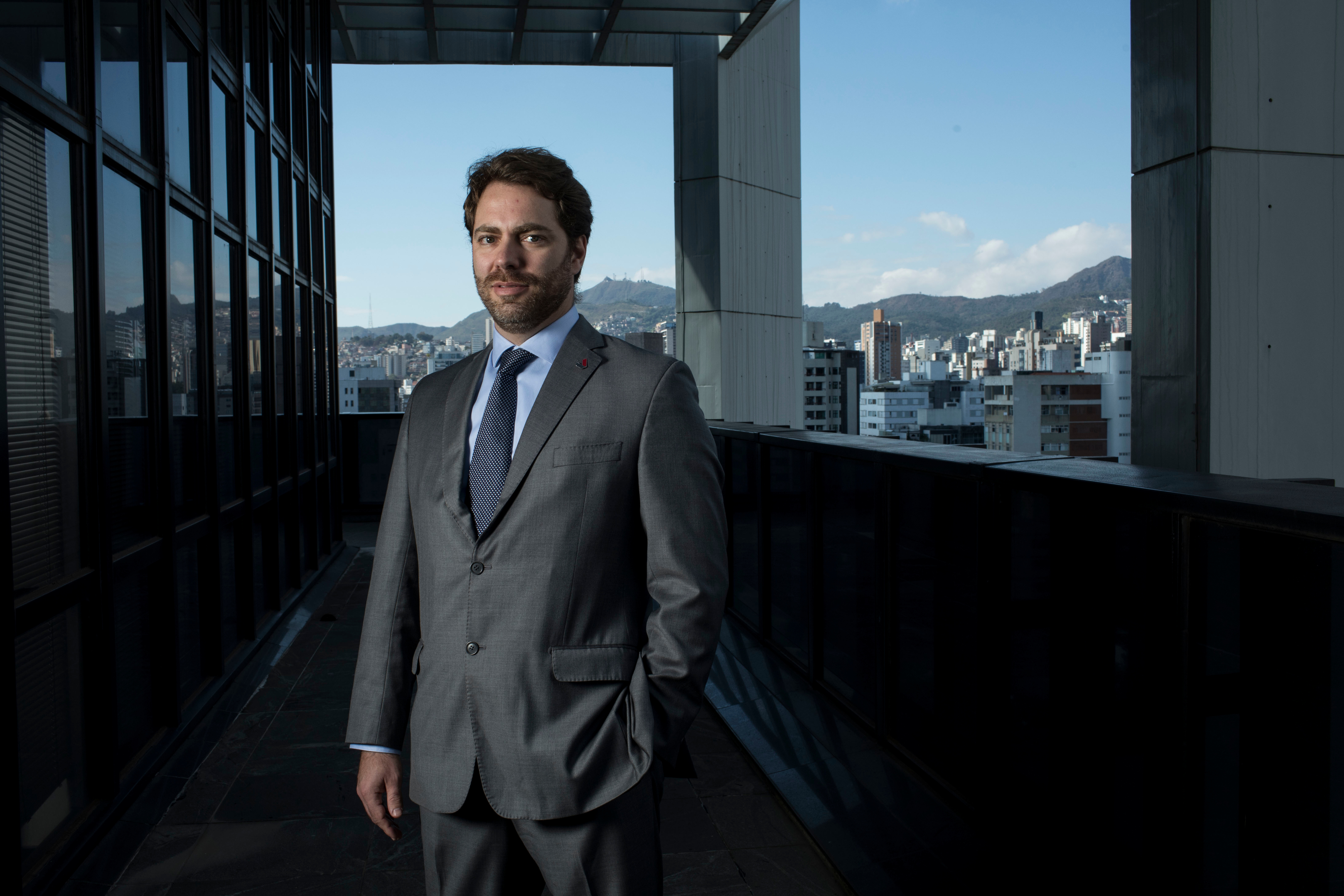
Sergio Gusmão Suchodolski is currently the President of the Development Bank of Minas Gerais S/A - BDMG and of the Brazilian Development Association (ABDE). He is also the Director of the Executive Committee of the Latin American Association of Financial Institutions for Development (ALIDE). He holds a bachelor's degree in Law from USP, a Master's in Law from Harvard Law School and in International Trade, Economics and Political Science from Sciences Po - Institut d'Études Politiques de Paris. He was the general director of Strategy and Partnerships at the New Development Bank, the BRICS bank, in Shanghai. He also served as the BNDES' President's Chief of Staff.
Sergio, after receiving your Master’s in Law degree, from Harvard Law School in 2007, you continued involved with the university, first as a member of the Harvard Law School council and later as part of the Brazilian Alumni network. How important were the years you spent at Harvard in shaping your academic and professional career?
My period at Harvard was a rich experience indeed. Besides the classes at the Law School, I had the chance to attend two very meaningful ones at HKS: Global Governance, with Professor John Ruggie, and American Foreign Policy, with Professor Joseph Nye Jr. Furthermore, after getting elected by my peers, I also contributed to the Law Scholl Board, in which I had the chance to have a deeper interaction with the School community, with a noteworthy reference to Professor Elena Kagan, who is now serving as US Supreme Court Judge. After that period, I had the chance to return a few times to join events related to the Negotiation Program, Alumni reunions, took part on the Abraham Path, and joined the 2016 Edition of the Brazil Conference as a speaker.
Therefore, these interactions on various aspects of the academic life, from school’s programs to the fantastic community of students that I was able to meet, were especially fascinating and undoubtedly influenced the professional path I have taken since then.
Immediately after graduating, I accepted the invitation from Professor Roberto Mangabeira Unger to join his team at the at the Secretariat for Strategic Affairs of the Presidency of the Republic of Brazil as his Special Adviser. With that, I took an important step in my career in the public sector and, above all, in the theme of development finance and planning.
Before working for BDMG (Development Bank of Minas Gerais), you were the Director at the New Development Bank in Shanghai, leading it successfully for over two years. Tell us about your drive to return to Brazil and take up the challenge of being CEO of the BDMG?
The years in Shanghai were fascinating ones in which I was able to work with development finance in the five-member countries of the BRICS (Brazil, Russia, India, China, and South Africa). It was also a time when I deepened ties of collaboration with other multilateral development banks, including those in the Western Hemisphere, Europe, Africa, Asia. In this sense, it was a period of intense learning, one in which I could follow the dynamism of the BRICS’s economy and get involved in the financing of projects and design of solutions for the development of emerging economies.
That idea of working close to the field, in a subnational development bank like BDMG that can produce a tangible, positive impact on the ground was key to my decision to return to Brazil. Besides, I have a personal relationship with Minas Gerais, with deep family roots in the place. I believe this is a key state for Brazil’s Sustainable development trajectory.
As the Bank’s CEO, I had the chance to assemble a technical team dedicated to the theme of financing for development. Thus, contributing to the application of new ideas for development and the promotion of BDMG’s credit portfolio realignment around sustainable objectives, with the design of new financing programs and the structuring of infrastructure projects.
We are now in the third year of our tenure at the Bank, with very concrete results: a high impact portfolio, with the evolution and execution of sophisticated development financial instruments, the issuance of a sustainable bond – the first of its kind by a Brazilian development institution - and expansion of our digital platform and programs that are in line with the 2030 agenda, the Paris Agreement, and the Addis Ababa Action Plan. We have also greatly expanded our partnerships with international institutions and other subnational development banks throughout Latin America, Brazil, and other parts of the world, through agreements, exchanges, workshops, and partnerships.
Since joining BDMG you have strengthened the network of development banks in the Global South and elevated the agenda towards the sustainable development goals. What other innovations have you sought and what priorities have you set for BDMG as president of the bank? Are there any success stories you’d like to share?
Subnational development banks (SDBs) have an important role to play in financing the implementation of the Global Development Agendas in cities and territories. They can amplify the reach and effectiveness of development networks by serving as the last-mile specialist on the ground, identifying opportunities and connecting local actors to global sustainable development-oriented funds. As an SDB itself, BDMG is committed to channel financing at the subnational level and pave the way for the development of stronger subnational financial markets.
During my term, especially during the pandemic, the Bank emphasized its countercyclical role. We created new credit lines tailored to fighting the pandemic’s impact and as we expanded, we have progressively aligned them with United Nations’ Sustainable Development Goals (SDG’s) by increasing the availability of credit for initiatives related to clean energy, innovation, and infrastructure. But beyond its classical task of credit provider, the Bank has also deepened its role as a development platform and strengthened its international partnerships to create a more integrated environment among Development Finance Institutions (DFI’s) in the region. In this sense, we have been active players in project preparation phases of key infrastructure investments at the municipal and state levels and contributed to important forums and debates on sustainable development in the Global South. As one concrete result, we have just launched the Alliance of Subnational Development Banks in Latin American and the Caribbean in partnership with the French Development Agency (AFD), the Global Fund for Cities Development (FMDV), and the Institute for Sustainable Development and International Relations (IDDRI).
On top of that, BDMG has been expanding its strategy to promote funding diversification, intensifying the raising of financial resources in the international and domestic markets. In 2020, around BRL 2.3 billion were raised, a historic record, aiming to provide financial support for the maintenance or structuring of new Bank credit lines.
Finally, and in line with that, BDMG became the first Brazilian public bank to issue a Sustainable Bond. The transaction was registered at the Depository Trust Company (DTC) and summed USD 50 million, which was subscribed by IDB Invest (InterAmerican Investment Corporation). These bonds should be transformed into credit lines for projects aligned with SDGs, benefiting not only environmental, but also social initiatives.
This year, the bank hosted a Harvard student as part of the DRCLAS’ Remote Summer Program internship for the first time. We heard from the student, and read in this ReVista article, of how impactful this experience was for him, both academically and professionally; and how impactful it was that both you and his supervisor were Harvard alumni. Please, tell us about this experience from your and the bank’s perspective. What would you say to other Alumni interested in hosting Harvard students as interns?
The first thing I would like to say is: get involved with the Program. It was indeed a great experience. On one hand, we benefited from the presence of a talented Harvard Undergrad student in our team for two months, sharing his perspectives and delivering high-quality materials. On the other hand, we were able to provide an important contribution to his learning experience, as he was granted access to a safe, innovative, and high-performance work environment.
In this sense, our experience showed that the Program creates an interesting win-win situation, with positive externalities both for the recipient organization, the student, and the University. For this reason, I strongly encourage my fellow Harvard alumni to open space for students who want to spend their summer in Brazil and hope to see this program gaining traction over the next few years.
Finally, the Program has been contributing to a deeper engagement between BDMG, DRCLAS, and the University as a whole, creating a larger vector of opportunities for future cooperation towards shared goals, such as the promotion of sustainable development of our region. Thank you very much.
Interview conducted by Camilla Roberts, Program Coordinator, Brazil Office