Alejandra Vela
Moderator
Assistant Professor of Romance Languages and Literatures. Harvard University.




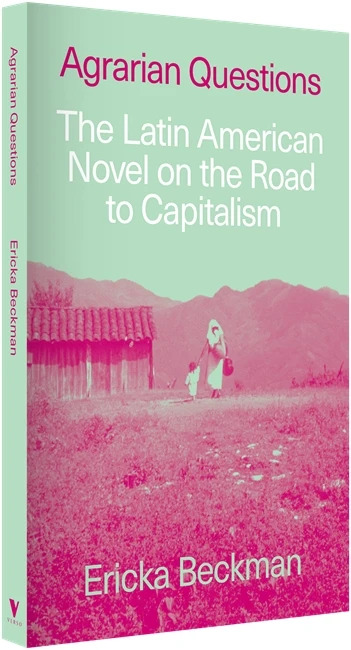
This workshop will be dedicated to discussing the book Agrarian Questions: The Latin American Novel on the Road to Capitalism (Verso 2026). This book traces how, in the half-century running between 1910 and 1970, the Latin American novel plotted multifarious “roads” to capitalism in agriculture, which ranged from the dissolution of the colonial latifundium and creation of smallholders to the mass expulsion of peasants to burgeoning cities.
Through their sui generis deployments of realist, naturalist, modernist and folk modes, the book explores how novels of the period narrated the epoch-making agrarian transitions that brought modern Latin America into being.
This event is presented in collaboration with the Department of Romance Languages and Literatures, Harvard University.
Assistant Professor of Romance Languages and Literatures. Harvard University.
Professor of Spanish and Portuguese, University of Pennsylvania.

Smith Professor of Romance Languages and Literatures and Comparative Literature, Harvard University.

Alejandra Vela, research Interests: 20th-21st Century Mexican Cultural Studies, with broad interests in transnational mass culture, archives, feminine periodicals and literature, diasporic and border feminine literature, their reception and preservation throughout Latin American Modernity. I have also researched Latin American cinema, T.V. and their role in creating specific notions of gender, womanhood, and queerness.
As a whole, my research questions the Latin American cultural field by looking at how different “counter-archives”, as I call them in my current book manuscript, illuminate literary and cultural history involving feminine writers and materials. I defend the need, within the Humanities, to celebrate the ways femininity has intervened in the public sphere, while rethinking the limits of what is considered Literature and Culture. I consider this a necessary step towards a reconceptualization of intellectual history based on feminized aesthetics that unearth a myriad of female and women writers, editors, readers heretofore left out of the canon.
My current book manuscript, Newsstand Feminism: Cursi Aesthetics and Feminist Genealogies in Mexican Women’s Periodicals, analyzes women’s magazines from the 1940s to the 1980s. I argue that these periodical publications, though not considered feminist by current canons, were instrumental in the creation of a transhemispheric feminist press, both at the level of content and form. In addressing the oeuvre of Rosario Castellanos, Rosario Sansores, Vicente Leñero, and the collective behind fem magazine, I identify and track the ambivalent presence of what I call “cursi (corny) aesthetics” –that is, formal principles constructed by particular understandings of femininity associated with the subjects that produce and consume them. By using an interdisciplinary approach that involves affect theory, queer theory and theory of the archive, I challenge the hermeneutical paradigms through which we evaluate cultural production. Thus, my research reveals that prejudice impacts reception studies, regulating consumption patterns and current perceptions of culture and canon.
As a postdoctoral fellow at the UNAM, I edited a forthcoming critical volume of Mexican writer and “cronista” Rosario Sansores’ work in the Novedades newspaper. Sansores’ daily column “Rutas de emoción” expanded from 1939 to 1972 and made her one of the most read columnists of mid 20th-century Mexico. However, and even though she had a broad feminine readership, she was forgotten by both the general public and academia. As this volume shows, I am invested in reintroducing into academic conversation different feminine aesthetics, still dismissed by certain feminist viewpoints because of their relationship with conservative notions of womanhood.
With my second book project, From Female Magazines to Family Longings: Border-Crossing Ideologies in 20th Century Greater Mexico, I aim to demonstrate the complexities behind the genealogies of female thought within Hispanophone communities, by rethinking the role of cultural objects deemed too “conservative” or frivolous, such as magazines Hola! or Para ti, through their presence in the Greater Mexico markets and “estanquillos” (newsstands). I believe this highlights a form of memory that has rarely been made visible from the perspective of literary and cultural studies.
Ericka Beckman is Professor of Spanish and Portuguese at the University of Pennsylvania. Her first book, Capital Fictions: The Literature of Latin America’s Export Age (University of Minnesota Press, 2013) studies how literature represented the region’s first major experiment with economic liberalism. Her second book, Agrarian Questions: The Latin American Novel on the Road to Capitalism, reinterprets the 20th-century Latin American novel as a form that narrated the uneven incorporation of hacienda-based and subsistence economies into national capitalist markets over the course of the century. In addition to authoring numerous articles and book chapters on the relationship between literature and capitalism in Latin America, she has co-edited, with Oded Nir and Emilio Sauri, an issue of Modern Fiction Studies on “Peripheral Literatures and the History of Capitalism.”
Mariano Siskind, Academic Degrees: BA in Letras, Universidad de Buenos Aires, Argentina; MA, PhD, in Comparative Literature, New York University. Research Interests: Nineteenth and Twentieth Century Latin American Literature; Travel Writing; Histories and Theories of Globalization and cosmopolitanism; Marxism; Psychoanalysis; Critical Articulations of Literature and Philosophy