

Cuban Entrepreneurs Drive Innovation in Growing MIPYMES Sector
Micro, Small, and Medium Enterprises (MIPYMES) are reshaping Cuba's economy, with innovative entrepreneurs leading the charge despite significant obstacles. Officially recognized by the Cuban government in 2021, MIPYMES have since become vital job creators, producing diverse goods and services under complex regulations.
On October 4, the DRCLAS Cuba Studies Program hosted a conference highlighting the contributions of MIPYMES owners, who shared insights on navigating Cuba’s business landscape. Key challenges discussed included regulatory uncertainty, high employee turnover due to emigration, and limited access to technology and international financial systems. Yet, the resilience of Cuban entrepreneurs stood out, as did their commitment to fair wages and continuous employee training.
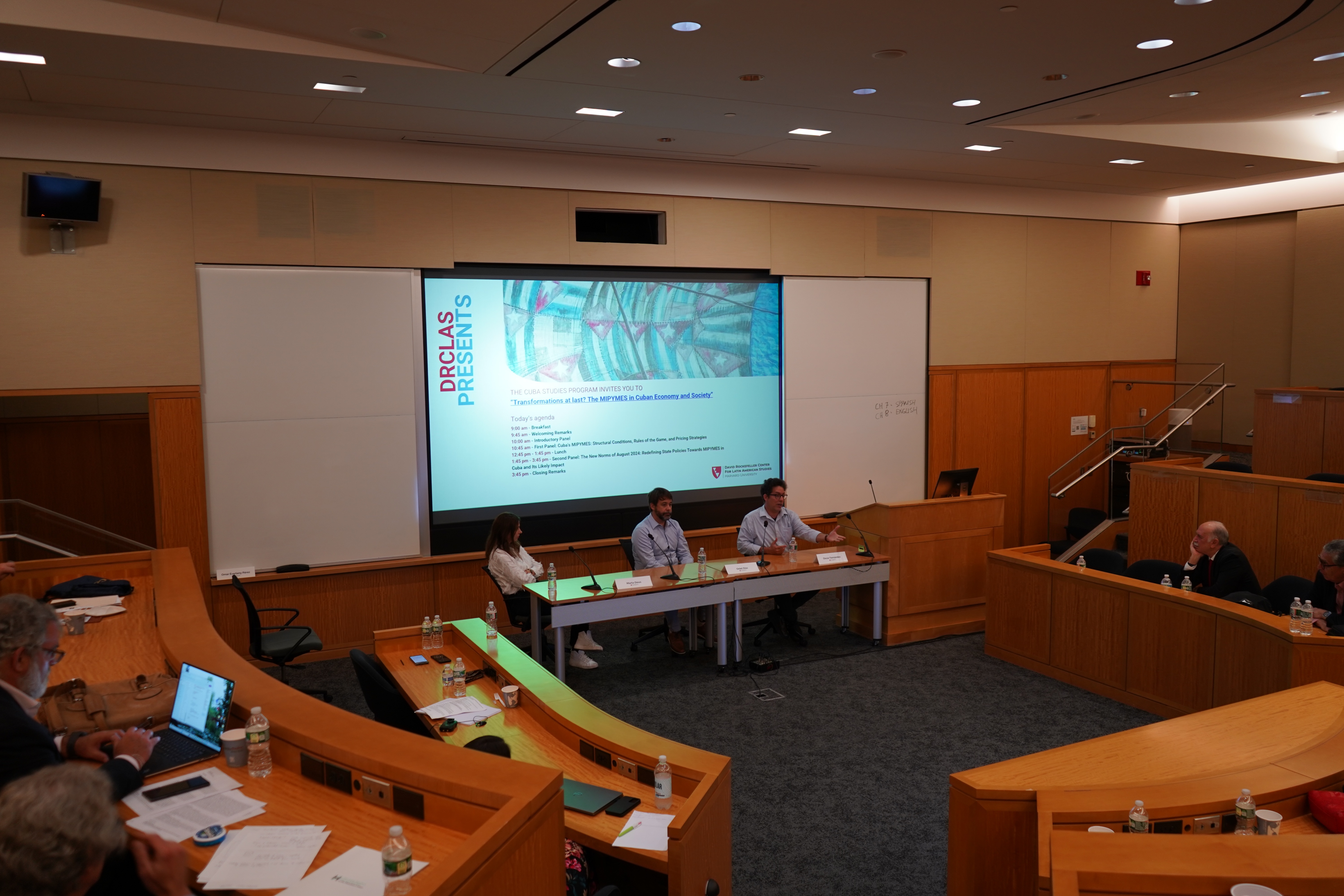
"Since their creation in 2021, there has been much debate about the nature and possible roles of the MIPYMES," noted Alejandro de la Fuente, Robert Woods Bliss Professor of Latin American History and Economics and Chair of the Cuba Studies Program. "This was an opportunity to learn from Cuba-based entrepreneurs, in conversation with a group of distinguished economists. That is what the Cuba Studies Program does best: we frequently identify pressing questions and seek answers in conversation with actors with different views."
Among the speakers was Diana Figueroa, owner of Jíbaro restaurant and co-founder of La Mata and ConBAC. Known for her resourcefulness, Figueroa shared how she creatively manages restrictive alcohol purchase laws, buying in bulk and reselling to other small restaurants at a fair margin. Lauren Fajardo, co-founder and Creative Director of Dador, detailed her commitment to sustainability by using fabric scraps to craft unique earrings, maximizing every material and reducing waste. Marta Deus, CEO of the delivery service Mandao, highlighted the ongoing challenge of training new staff amid high turnover driven by emigration. Oscar Fernández, co-founder and CEO of Deshidratados Habana, shared how he developed dehydration techniques at home to preserve harvested fruits, scaling his business with a custom-made oven after several trial-and-error attempts.
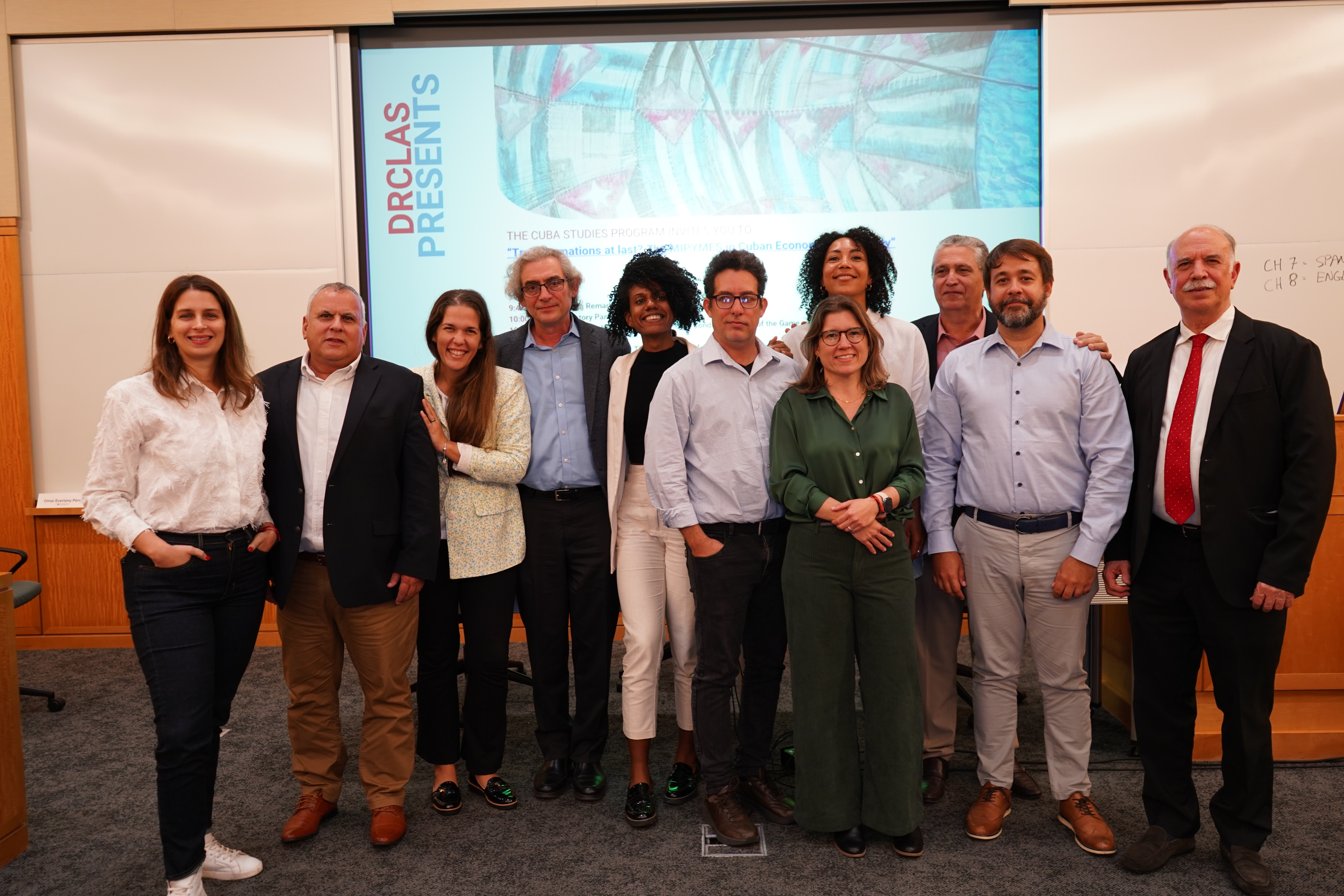
Other Cuban entrepreneurs participants included Juan Carlos Albizu, Professor-Researcher at the Christian Center for Reflection and Dialogue (CCRD-Cuba); Omar Everleny Pérez, Economist and Professor affiliated with the CCRD-Cuba; Adriana Heredia, Co-Founder and CEO of Beyond Roots; and Oniel Díaz, Co-founder and Partner of AUGE.
The event was moderated by Pedro Monreal; Omar Everleny Pérez and Juan Carlos Albizu, each of whom brought unique expertise and perspectives to the discussion.
While cautious about future U.S. support, these entrepreneurs remain committed to driving Cuba’s economic evolution, pushing boundaries, and fostering resilience within a challenging business environment. Their ongoing work not only inspires but also sets a foundation for a sustainable, locally driven economy.