Language as a Bridge: Advancing Literacy Through Interactions in Brazil
What do everyday conversations between adults and toddlers have to do with teenagers understanding textbooks—or with national education policy? Quite a lot, actually.
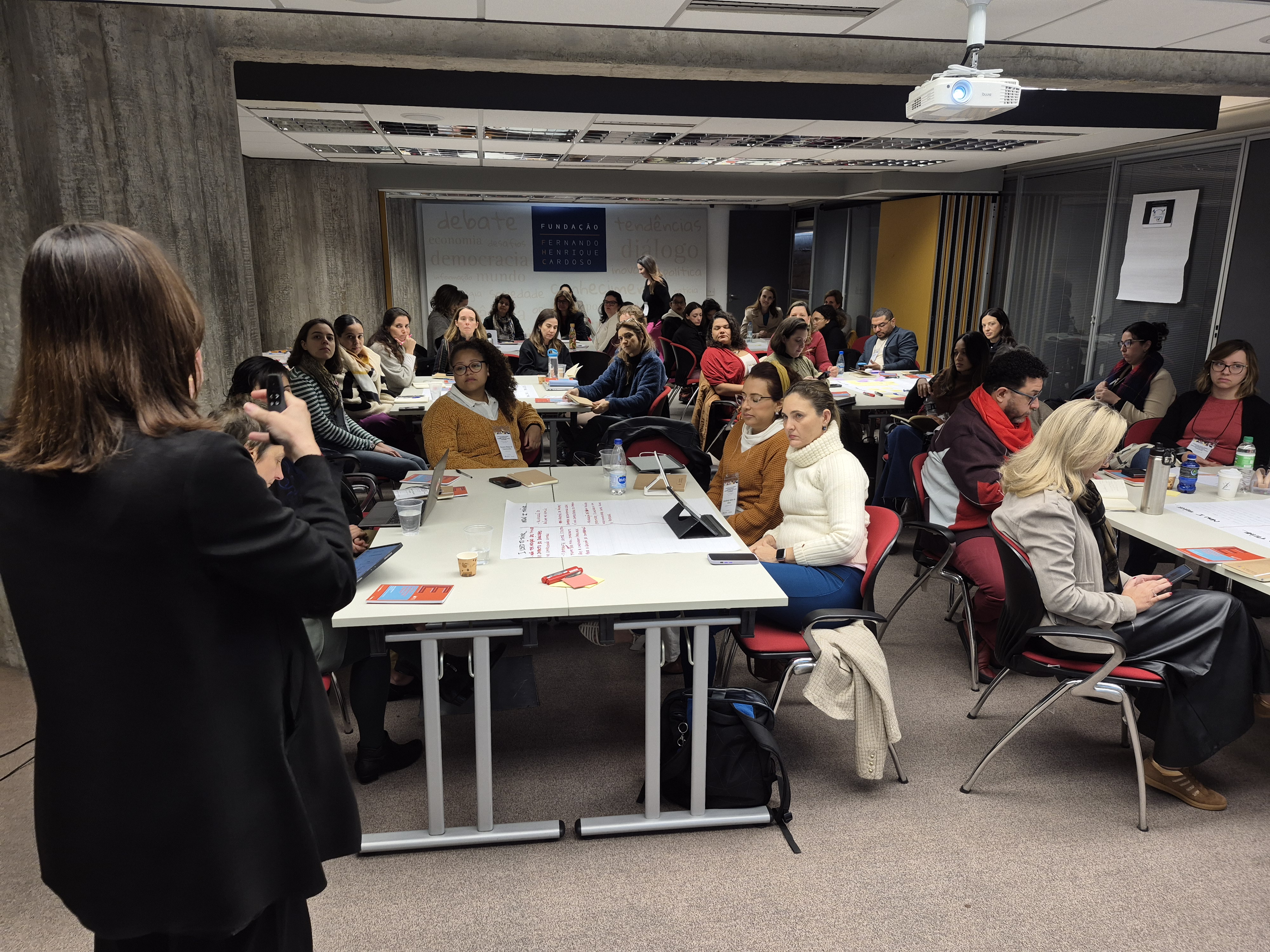
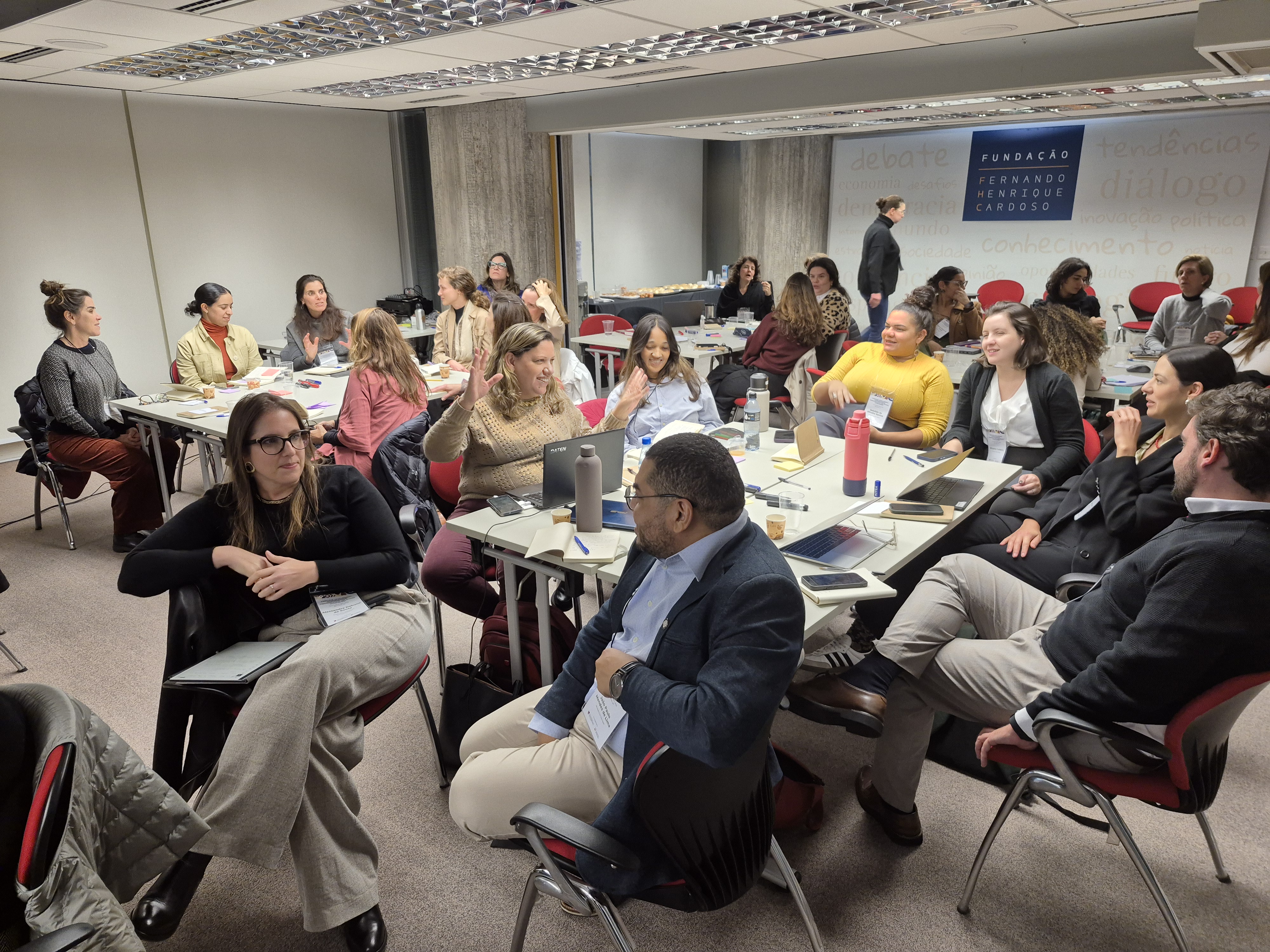
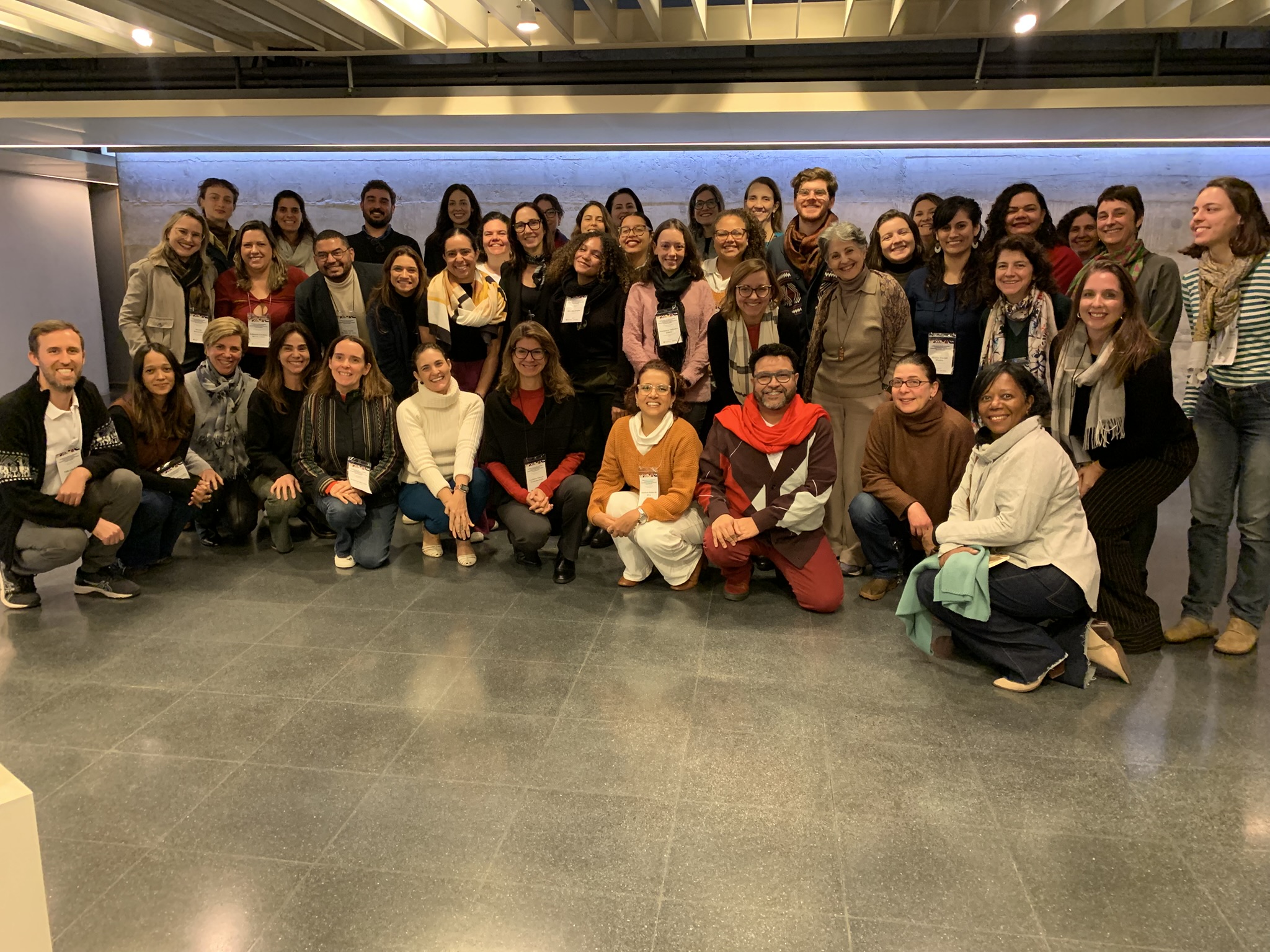
That connection was at the heart of the “Language Development: Comprehension, Communication and School Achievement” course, held in São Paulo this June through a partnership between the DRCLAS Brazil Office and Laboratório de Educação. Led by Harvard Professor Paola Uccelli, the course brought together leaders from government, NGOs, academia, and the media to explore how language development—from early childhood through adolescence—shapes learning, opportunity, and educational equity.
“It was a privilege to share research with such a committed, action-oriented group,” said Professor Uccelli. But for her, it wasn’t just about presenting international data. “Because of my long-term partnership with Labedu, we could show how these findings are already informing real educational interventions in Brazil.” Those interventions—Aprender Linguagem and Aprender a Estudar Textos—have been twice supported by the Lemann Brazil Research Fund and were developed to strengthen language skills in early childhood and adolescence. They also reflect a shared principle central to the course: that children’s ability to understand and express complex ideas through language is essential not only for literacy, but for long-term learning and participation in society.

Throughout the three-day course, hosted by Fundação Fernando Henrique Cardoso, Paola emphasized that strong language skills—knowing how to understand and share ideas in speech and writing—are more critical than ever. In a rapidly changing world where the jobs, technologies, and civic challenges students will face are unpredictable, the ability to learn through language is a foundation for future success. At the same time, many children and adolescents arrive at school with vastly different language experiences. “Students walk into classrooms bringing a wide range of language abilities,” Paola explained. “And many adolescents continue to struggle with the language used for reading, writing, and learning—even after years in school.” If these language differences are ignored, she warned, educational and social inequalities risk growing deeper.
That’s why the course didn’t just focus on instruction in reading, but on the broader ecology of language development. Educator Stefânia Sales, from Associação Bem Comum, said the course offered tools to rethink how both teachers and parents guide conversations: “The findings gave me concrete ways to think about how to make dialogue more intentional—especially in early education—so that children’s reading comprehension improves over time.”
The course came at a pivotal time for Brazil, as national strategies like the Compromisso Nacional Criança Alfabetizada renew attention to literacy. “With major government investment and policy discussions underway, bringing Paola’s expertise to Brazil now was particularly timely,” said Beatriz Cardoso, ALI Fellow '13, Impact Leader in Residence '23, founder and director of Labedu. “It allowed us to bring different sectors to the same table to face a shared national challenge.”

For Isabel Schwartzman (M.Ed. ’12), a Brazilian education executive and international consultant, the course offered both local and global insight. “What children experience in their early years impacts their schooling all the way through high school—and beyond,” she said. “The course gave us a space to reflect on tough educational challenges through the lens of applied research and intercultural exchange.”
One study shared during the course—and later featured in Renata Cafardo’s Estadão column and podcast—left a strong impression on many participants: children who engage in richer conversations in early childhood, such as storytelling, pretend play, and asking questions, show greater proficiency in academic language a decade later. In a world obsessed with fast solutions and digital tools, this message landed with surprising force: talking with children still matters.

“When children talk about ideas, they build their vocabulary, practice expressing themselves, and learn to see things from others’ points of view,” Paola concluded. “They also get the guidance they need to unlock the meaning of texts.” As Brazil works to ensure that all children not only access school, but truly learn and thrive, prioritizing language development—at home, in classrooms, and in policy—is key. In the end, this course reminded everyone that meaningful, sustained conversation isn’t a luxury. It’s a powerful lever for equity, and a foundation for preparing students to become the independent learners our world needs.
The course also reaffirmed the mission at the heart of our Early Childhood Development initiative: to connect research, policy, and practice in support of young children’s learning across Latin America. By examining how language shapes learning from the earliest years, we continue to strengthen our commitment to advancing more equitable, evidence-informed approaches to early development.