If Brazil’s Biomes Could Vote, What Would They Ask of the Next President?

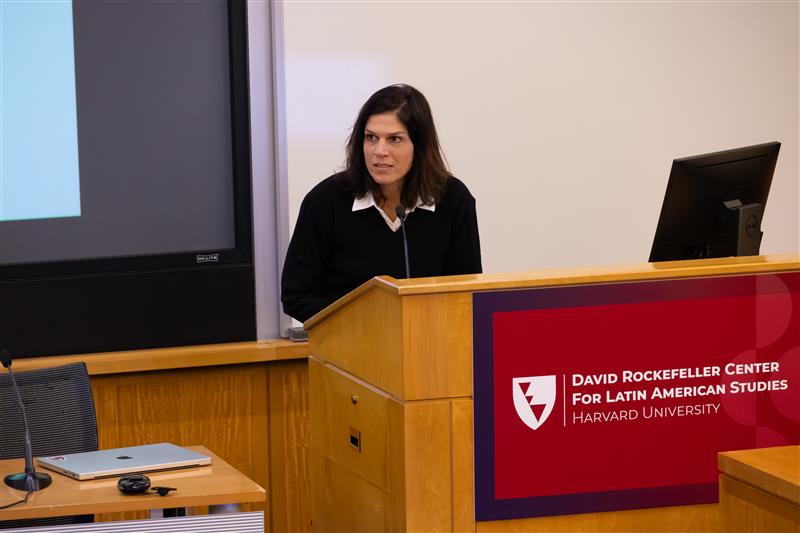
At Harvard, during the 2026 Lemann Dialogue: Six Biomes, Multiple Realities, One Country, a different kind of political message began to take shape—not from candidates or parties, but from experts working across Brazil’s ecosystems.
If Brazil’s six biomes could speak, their message to the next president would be clear: implementation—not intention—will define the country’s environmental future.
That message emerged during the closing panel of the Dialogue’s first day, where specialists focused on the Amazon, Atlantic Forest, Cerrado, Caatinga, Pantanal, and Pampa were asked to identify three priorities for Brazil’s next administration. The goal was not to define a unified agenda, but to surface grounded, plural perspectives—and to identify where those priorities might converge.
Across biomes, a shared diagnosis quickly became clear: Brazil already has many of the legal and policy tools it needs. From the Forest Code to territorial protections and water governance frameworks, the central challenge is not designing new solutions, but enforcing existing ones.
If the Atlantic Forest could speak, it would begin with political strategy. Renata Piazon, CEO of the Arapyaú Institute, argued that environmental issues will only shape the 2026 elections if they are reframed in ways that resonate with voters’ daily concerns.“If we want to have any chance of putting climate on the election agenda this year in Brazil, we have to connect it through the lens of security.”
Her priorities—land tenure regularization, enforcement of the Forest Code, and economic incentives for a national bioeconomy—point to a broader reality: without legal certainty and financial mechanisms, conservation cannot scale.
From the Caatinga, Daniela Nogueira of the University of Brasília’s Center for Sustainable Development shifted the focus to people. Moving beyond short-term assistance, she emphasized the need for development models rooted in equity and long-term inclusion. Her priorities included embedding gender, racial, and generational equity into climate policy, ensuring a just energy transition that benefits local communities, and advancing socio-bioeconomic models that strengthen autonomy rather than dependency.
The Pampa, often overlooked in national debates, brought a different kind of urgency. Marcelo Spinelli Elvira, Executive Secretary of the Forest Code Observatory, called attention to the ecological value of native grasslands and the communities that sustain them. His priorities focused on protecting these ecosystems, treating the Forest Code as a core state policy rather than an optional framework, and strengthening territorial recognition for Indigenous and quilombola communities.
The Amazon’s message centered on political representation. Vanda Witoto, Executive Director of the Witoto Institute, emphasized that without leaders genuinely committed to environmental and territorial agendas, even the most well-designed proposals will fail to materialize. Her priorities included advancing Indigenous and quilombola land demarcation, strengthening political participation—particularly of women and Indigenous leaders—and investing in socio-bioeconomies that prioritize people, cultures, and small-scale production over extractive models.

From the Cerrado, Mercedes Bustamante, professor of ecology at the University of Brasília, offered a stark warning about the limits of current frameworks. In the biome, much of the deforestation taking place is not illegal, but permitted under existing law—highlighting a deeper structural issue.“Brazil needs to rethink its entire water resources policy… it was not designed for a country that is becoming hotter, drier, and marching very quickly toward water bankruptcy.”
Her priorities included ending legal deforestation, rethinking water governance for a changing climate, and strengthening territorial intelligence to better protect vulnerable lands.
In the Pantanal, agronomist and rural producer Gilson Barros highlighted the fragile balance between production and preservation. His focus included addressing erosion and sedimentation from surrounding highlands, improving fire management, and supporting models of production that can coexist with conservation—an approach he argued is essential to maintaining the biome’s relative preservation.
As the discussion unfolded, several cross-cutting themes emerged. Water—fragmented in governance but unified in reality—surfaced as a shared concern across all biomes. So did the limits of presidential power: many of the decisions shaping environmental outcomes depend on Congress, state governments, and the institutions responsible for implementation.
By the end of the panel, moderator Marcia Castro, Chair of Global Health and Population and Andelot Professor of Demography at the Harvard T.H. Chan School of Public Health, drew a clear conclusion: while each biome faces distinct challenges, their priorities are deeply interconnected—and cannot be addressed in isolation. Territorial protection, enforcement of existing laws, social inclusion, and long-term public investment are not parallel agendas, but mutually reinforcing ones that require coordinated action across regions and levels of government.
If Brazil’s biomes could speak, they would not ask for new ideas. They would demand political will—and a governing approach capable of turning existing commitments into coordinated, sustained action.
Six Biomes, One Conversation