

Six Biomes, Multiple Realities, One Country: What Was Learned at the 2026 Lemann Dialogue
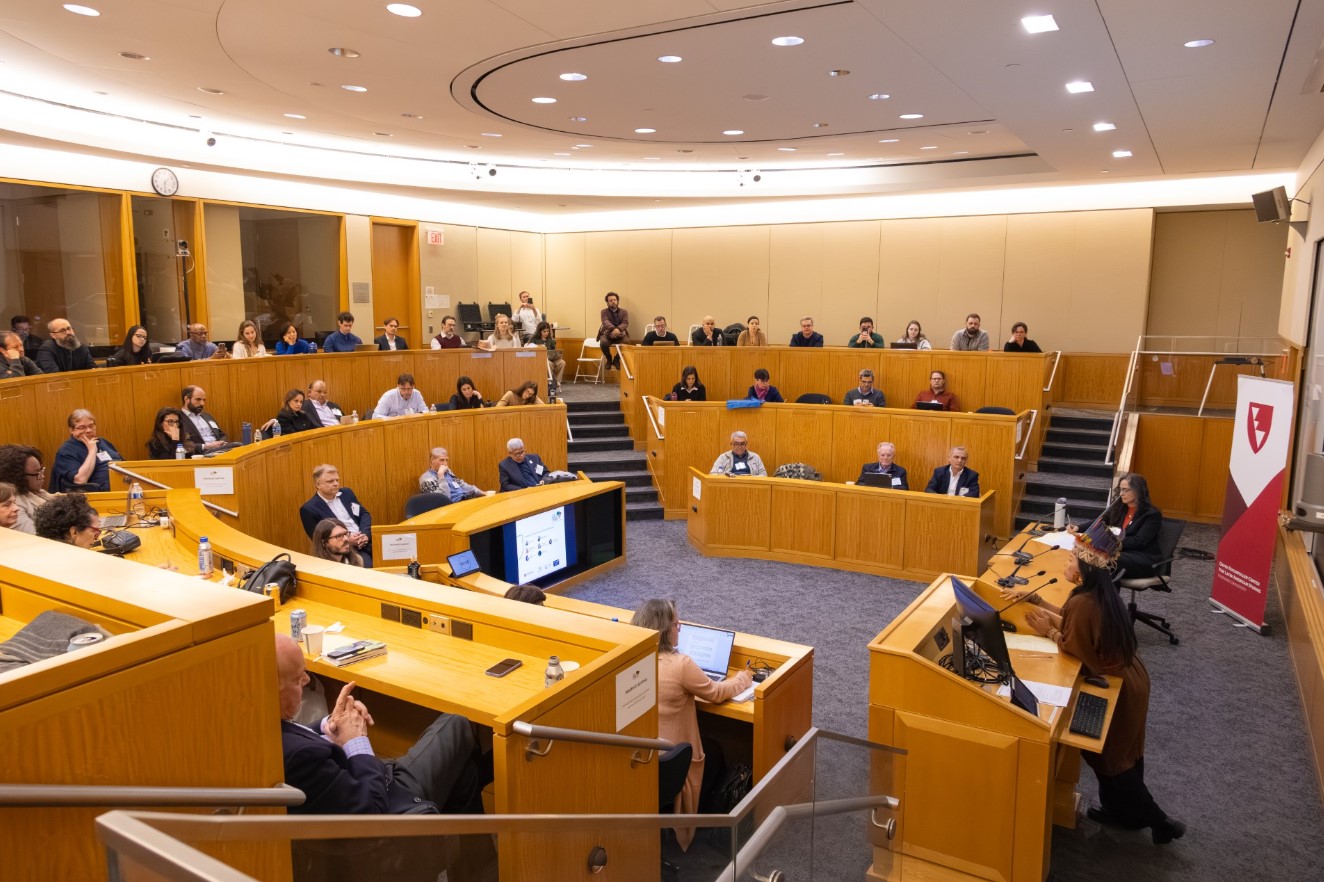
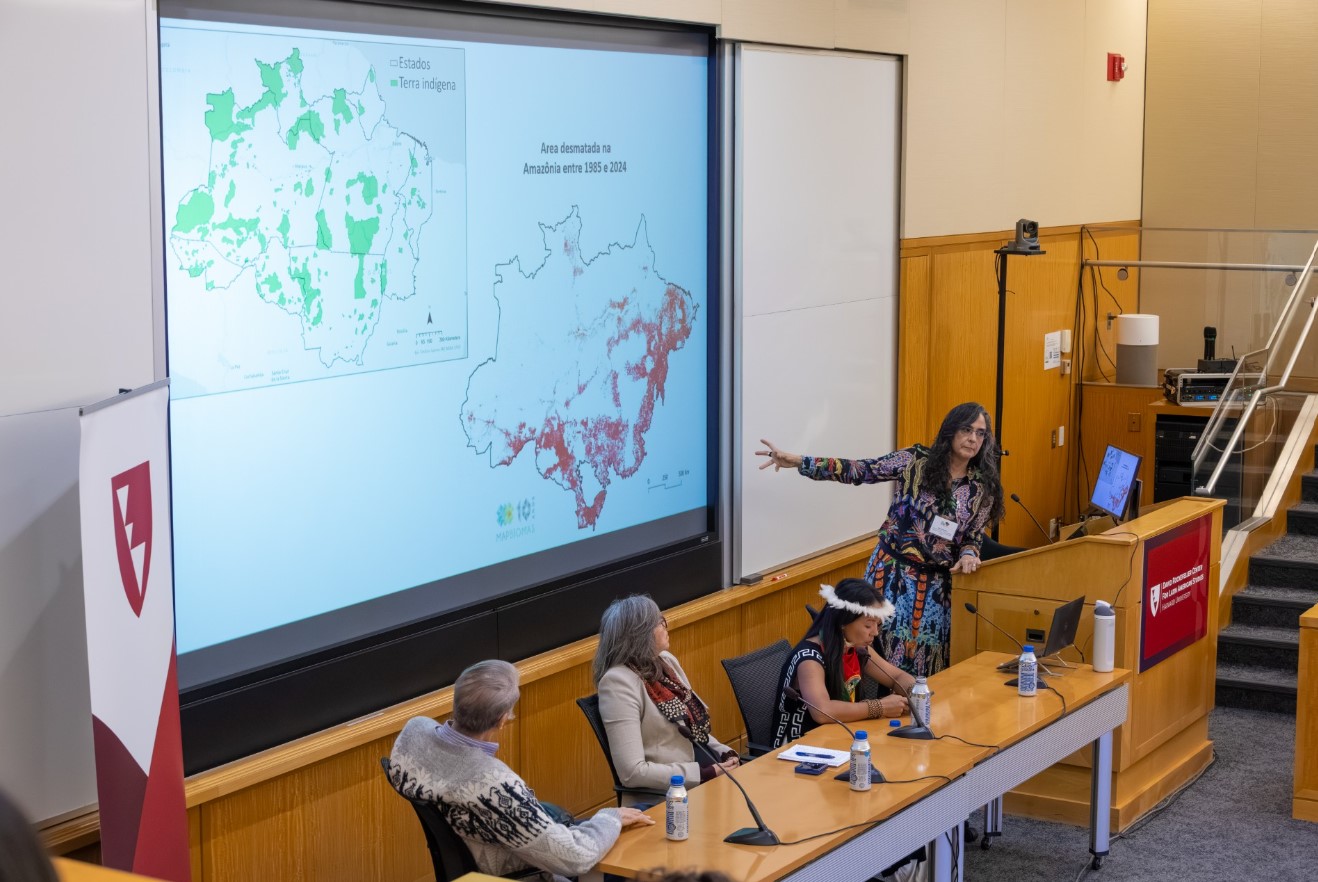
Talita André, Columbia Climate School candidate, shares her reflections on restoration, economic development, and the future of Brazilian biodiversity as discussed at the 2026 Lemann Dialogue: Six Biomes, Multiple Realities, One Country.

The Critical Path Forward
The highlights of the two-day panel series regarding Brazil's environmental governance and economic future:
01
Systemic Interdependence
Treating each biome in isolation is a diagnostic error. Restoration requires an integrated agenda where imbalances in one affect the resilience of all.
02
The Legislation Paradox
Brazil possesses exemplary frameworks (Forest Code, Atlantic Forest Law), but fails drastically in monitoring, implementation, and accountability.
03
Ending the "Geographic Vacuum"
The narrative of geographic emptiness served as a historical vector for destruction. Deforestation did not yield real development; it generated concentrated profits.
04
Finance and Advocacy
The central bottleneck is the financing architecture. Environmental agendas must be translated into competitive economic data to engage with Congress.
Panel Conversations: Exploring Brazilian Biomes
Note: The indicators cited here were presented during the conference and are included as shared in that context.
Atlantic Forest
Panel 1 - Restoration and Economy
Atlantic Forest: A Success Case with Challenges
Speakers: Marcelo Medeiros, José Augusto Pádua, Fábio Scarano, Renata Piazzon.
The Atlantic Forest serves as a proof of concept for large-scale ecological recovery. Having faced five centuries of degradation, it is currently the only Brazilian biome where restoration outpaces primary forest loss in several regions.
Strategic Conclusions:
- Intentionality in Restoration: Spontaneous recovery is insufficient. To reach the 35% ecological tipping point needed for species survival, restoration must be planned, funded, and integrated into regional economic planning.
- The Legislative Leverage: The Atlantic Forest Law is a unique legal shield that must be defended against attempts to weaken protection. It proves that specific, biome-tailored legislation works.
- Financial De-risking: The transition from 28% to 35% coverage requires de-risking restoration projects for private investors and aligning carbon markets with high-biodiversity outcomes.
Strategic Indicators
- Recovery Target: 35% (Ecological Minimum)
- Current Status: 28% Forest Cover
- Civil Society: +300 organizations in Pact
"For the first time in 500 years, a generation can hand over the Atlantic Forest better than they received it. That moment is now, and that generation is ours." — Marcelo Medeiros
Caatinga
Panel 2 - Climate Change in the Semi-Arid
Caatinga: Adaptation and Sustainability
Speakers: Marcelo Leite, Kenia Rios, Washington Franca-Rocha, Daniela Nogueira
The Caatinga is the only exclusively Brazilian biome and one of the most vulnerable to climate change. The panel highlighted that the stigma of a 'dry and dead biome' has hindered investment and preservation.
Key Insights:
- Monitoring Blind Spots: Large-scale deforestation often goes unrecorded by traditional satellite methods because the biome’s deciduous nature mimics degradation. Better sensors and specialized monitoring are critical.
- The Desertification Crisis: With 60% of the territory at risk, the focus must shift from "fighting drought" to "coexisting with the semi-arid," valuing traditional agro-ecological practices.
- Renewable Energy Paradox: While the Pampa and Caatinga are hotspots for wind and solar energy, poorly planned infrastructure is becoming a new driver of habitat fragmentation.
Key Indicators
- Only exclusively Brazilian biome
- 46% of territory already deforested
- 60% at risk of desertification
"The Caatinga can shift from being a dryland hotspot to a hotspot for adaptation and living in harmony with the environment in a dignified manner, bringing together people and communities in all their diversity." — Daniela Nogueira
Amazon
Panel 3 - The Advocacy Frontier
Amazon: Bioeconomy and Climate Justice
Speakers: Marcia Castro, Vanda Witoto, Philip Fearnside, Ane Alencar
The Amazon debate shifted from biology to geopolitics. The panel underscored that the biome's stability is now a matter of national security and international credibility.
Expert Consensus:
- Law Enforcement as Baseline: Technology alone (DETER/PRODES) is not stopping deforestation; organized crime has adapted. The State must regain territorial control through intelligence and field presence.
- Beyond Extraction: A viable bioeconomy requires moving from low-value raw extraction to complex nature-based products, utilizing indigenous technologies as part of the industrial matrix.
- Climate Justice: The protection of the forest is inseparable from the protection of its people. Investing in urban infrastructure in Amazonian cities is essential to reduce the social pressure on the forest frontier.
Key Indicators
- Recent Trend: 65% Deforestation drop
- Economic Goal: High-complexity Bioeconomy
"The earth is our mother, the forest is our sister, and the rivers are our grandparents. They are family members we need to care for and who need to exist, just as we do." — Vanda Witoto
Cerrado
Panel 4 - Agriculture and Preservation
Cerrado: The Cradle of Waters at Risk
Speakers: Sandro Dutra e Silva, Ryan Nehring, Ludmila Rattis, Mercedes Bustamante
The Cerrado is Brazil's "upside-down forest," where the majority of carbon and water storage happens underground. Its rapid conversion is threatening the very hydrologic cycles that sustain Brazilian agribusiness.
Critical Findings:
- The Hydrologic Disconnect: The destruction of the Cerrado plateau directly impacts the energy security of the South/Southeast and the irrigation capacity of the Central-West.
- Carbon Market Misalignment: Current carbon markets often fail to value the massive root systems of the Cerrado, leading to skewed incentives that favor reforestation with exotic species over protecting native grasslands.
- Pasture Intensification: Brazil has enough degraded pasture to triple its agricultural output without clearing a single new hectare of Cerrado.
Key Indicators
- Hydrology: Cradle of 8 of 12 basins
- Carbon: Massive underground storage
- Threat: Fastest conversion rate in Brazil
"Agribusiness in Brazil is destroying the very water source that allows it to exist." — Mercedes Bustamente
Pantanal
Panel 5 - Biodiversity and Territory
Pantanal: Fire Challenges and Private Property
Speakers: Renato Roscoe, Gilson Barros, Teresa Bracher
The Pantanal highlights a unique challenge: the majority of the biome is privately owned. Conservation strategy is a matter of engaging with the traditional ranching community to adapt to a changing climate.
Panel Highlights:
- Fire Management: The fires of 2020/2024 proved that total fire exclusion policies fail. Integrated Fire Management (MIF) using controlled burns and professional brigades is the new standard.
- Traditional Cattle Ranching: Extensive, low-impact ranching is the historical guardian of the biome. Its economic viability must be protected to prevent land conversion to intensive soy or sugarcane.
- Highlands Interdependence: The Pantanal is a "drainage basin"—its health is 100% dependent on the preservation of the Cerrado springs in the surrounding highlands.
Key Indicators
- 97% private territory
- Total dependence on Cerrado water
- Critical risk of savannization
"97% of the territory is composed of private properties... conservation in the Pantanal needs to sit at the table with the rural producer." — Renato Roscoe
Pampa
Special Session - Documentary: Pampa, the Invisible Biome
Pampa: The Invisible Heritage
Speakers: Marcelo Elvira
The Pampa is marginalized both in the environmental agenda and the national imagination. It is seen as "empty space" or "the end of Brazil," but it is an ecosystem with unique biodiversity under threat.
- Invisibility: Documentary storytelling is being used as a new strategy to reach audiences technical documents cannot.
- Legislative Vigilance: Permanent monitoring in Congress is required to prevent setbacks in the Forest Code.
- National Asset: The biome needs to be elevated to national status in policy, not relegated to regional concern.
Key Indicators
- Lowest level of legal protection
- Accelerated Native Loss
"The Pampa is a Brazilian biome... it must be thought of as a national heritage, not just a Rio Grande do Sul issue." — Marcelo Elvira
Those who cannot remember the past are doomed to repeat it. Documenting, disseminating, and preserving the historical record of our biomes is essential to ensuring that the mistakes of the past are not repeated.” — Marcia Castro
Weren't able to attend? Watch the full recording of all panels:
Talita André
Columbia Climate School
Talita André is a specialist at the intersection of philanthropy, impact investing, and climate justice, with over 15 years of experience at leading organizations in Brazil, including Instituto Votorantim, Itaúsa, and Artemisia. Throughout her career, she has worked as a consultant and advisor to Institutes, Foundations, and Family Enterprises, supporting investment strategies, governance, and board-level decision-making. She holds a Master's degree in Entrepreneurship and Innovation from the University of São Paulo and is currently a Master's candidate in Climate and Society at Columbia University.