

What Happens When Cities Grow Outward? Professor Diane Davis on Mexico’s Urban Future
Mexico’s cities are growing, but much of that growth is moving away from their historic centers. As population and development expand toward the periphery, central areas are losing residents, raising new questions about infrastructure, mobility, land use, and the future of urban life.

Over the past three decades, Mexico’s urban population has grown dramatically. But that growth has not been distributed evenly across cities.
Research presented at Tecnológico de Monterrey, a leading university in Mexico, reveals a striking national pattern. Over the past 30 years, 2.5 million Mexicans have left the centers of their cities, while population growth has increasingly moved toward areas farther from urban centers. The study, which analyzed 69 metropolitan areas across Mexico, found that 62 of them lost population in their urban centers and that the average distance people live from city centers increased by 28 percent.
The consequences extend beyond where people live.
As cities expand, residents often become more dependent on private vehicles and governments must extend infrastructure and services farther from urban centers. At the same time, infrastructure that already exists in central areas, including transportation systems, schools, hospitals, and other public services, can become underused.
What explains this transformation? And how should Mexico respond?
These questions were at the center of Centrar el Futuro: De la gran pérdida a un nuevo modelo urbano para México, a panel discussion held at Tecnológico de Monterrey’s Mexico City campus on August 17, 2026. The event accompanied the presentation of the research initiative examining urban expansion and population loss across Mexico’s metropolitan areas.
The discussion brought together experts from different fields, including demography, public policy, urban planning, and regional studies, to examine a phenomenon that the research documents clearly but does not reduce to a single cause.
Among them was Professor Diane Davis, Charles Dyer Norton Professor of Regional Planning and Urbanism at Harvard’s Graduate School of Design and co-chair of the Mexico Studies Program at Harvard’s David Rockefeller Center for Latin American Studies (DRCLAS).
For Professor Davis, the search for one explanation may be part of the problem.
“So what’s the theory that explains that?” Professor Davis asked during the discussion. “I don’t think there’s a theory. I think there’s history.”
Her intervention brought a historical perspective to a conversation centered on contemporary patterns of population change and urban expansion.
Professor Davis argued that cities cannot be understood simply through national trends or recent demographic data. Each city has developed through its own economic, political, and social history, and those histories have shaped the relationship between its center and its periphery.
A city center that developed around industry, for example, may face different pressures than one shaped by commerce, government, or housing. Understanding urban transformation therefore requires asking not only why people are leaving certain areas, but also how those places developed and what purposes they serve today.
This perspective becomes particularly important as technology, climate change, housing markets, and broader economic transformations continue to reshape the value and use of urban space.
But the challenges raised by the research also extend beyond individual city centers. Water systems, mobility, housing, public space, and environmental pressures often connect people across an entire metropolitan region, even when those regions are governed by separate municipalities and institutions.
It was here that Professor Davis introduced another idea that helped expand the conversation: “regionalism from below.”
Rather than beginning with administrative boundaries, she asked whether shared problems might provide a stronger basis for regional cooperation.
“What is the issue that you can give regionalism from?” Professor Davis asked. “Is it ecology, or is it housing, or is it public space?”
The idea shifts the focus from how governments draw metropolitan boundaries to how people experience the problems that cross them.
A water crisis, for example, affects communities across municipalities. The loss of public space or environmental degradation can do the same. These shared experiences may offer new ways for citizens and communities to recognize their connections, and potentially act together.
The panel also included José Iracheta, subsecretario de la Secretaría de Desarrollo Agrario, Territorial y Urbano (SEDATU); Emmanuel León, Director General de Política Urbanística de la Secretaría de Planeación, Ordenamiento Territorial y Coordinación Metropolitana (Metrópolis); and Claudia Masferrer, profesora investigadora at the Centro de Estudios Demográficos, Urbanos y Ambientales (CEDUA) at El Colegio de México. Moderated by José Antonio Torre, Director of Tecnológico de Monterrey’s Center for the Future of Cities, the discussion brought together perspectives that reflected the complexity of the questions raised by the research.
The demographic data can show where population is growing and where it is declining. Public policy can address the institutions responsible for responding to those changes. Urban planning can consider how cities use land and infrastructure. Professor Davis’s contribution added another dimension: the importance of understanding the histories and relationships that produced the cities we see today.
Together, these perspectives point to a larger challenge. Mexico’s cities are not simply becoming bigger or smaller. They are changing shape.
As population moves outward, decisions about land use, infrastructure, housing, and public services will increasingly affect the relationship between central areas and the expanding regions around them.
For Professor Davis, responding to that transformation does not mean searching for a single theory, or a single solution. It means asking better questions about the places we already have.
How did they develop? What connects the people who live across their different territories? And which challenges can bring communities together beyond the boundaries that divide them?
The future of Mexico’s cities may depend on the answers.
To learn more about the research and explore its findings, visit Centrar el Futuro.
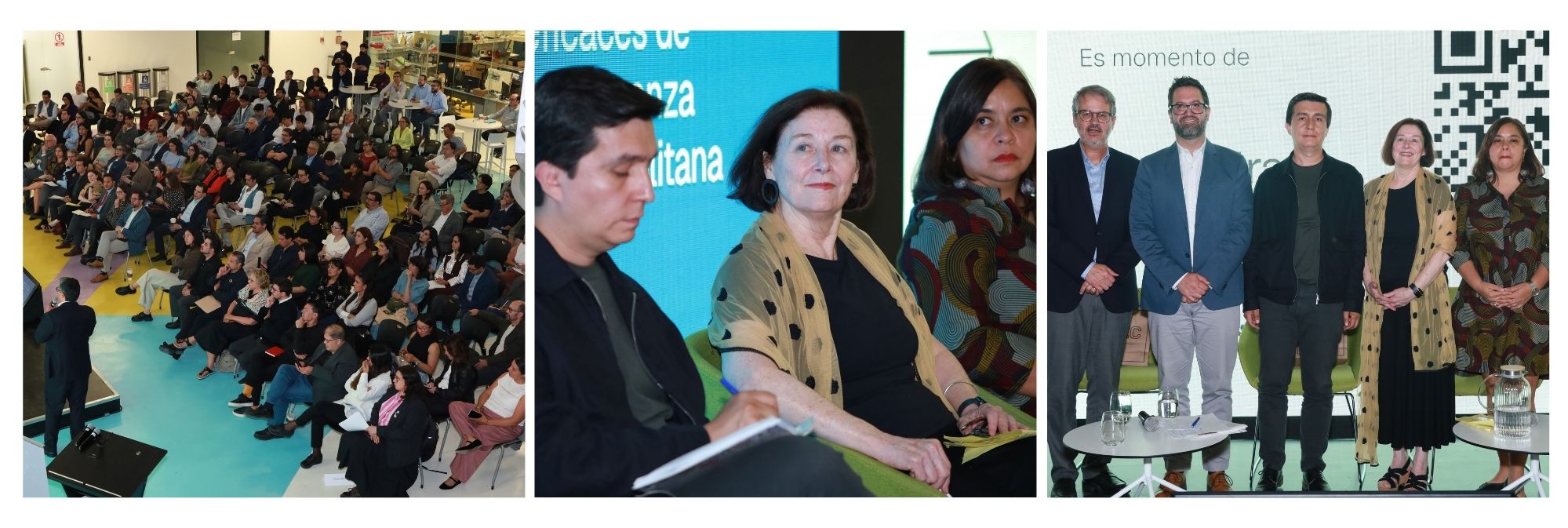
Photos courtesy of Instituto Tecnológico y de Estudios Superiores de Monterrey.